

Did you know that the Home Office refused over 21,400 family visa applications in a single year because the evidence provided failed to meet their precise evidentiary standards? Securing an unmarried partner visa uk requires more than just a shared history; it demands a strategic assembly of documentation that proves your subsisting relationship beyond any doubt. You’re likely feeling the pressure of the £29,000 minimum income requirement and the immense stress of proving two years of cohabitation without a single gap in your joint paper trail. It’s a daunting threshold that leaves very little room for administrative error.
We understand that the distinction between the fiancé route and the unmarried partner path often feels unnecessarily complex when your right to stay together hangs in the balance. This guide promises to help you master these complexities by providing expert clarity on eligibility and the specific evidence required to achieve an absolute standard of compliance for your 2026 application. We’ll break down the mandatory relationship documents, explain how to combine income sources to meet the financial mandate, and provide the strategic insight you need to submit your application with complete confidence.
Key Takeaways
- Understand the fundamental eligibility criteria under Appendix FM, focusing on how to demonstrate a relationship “akin to marriage” sustained over at least two years.
- Navigate the 2026 financial landscape by identifying the most effective ways to satisfy the £29,000 minimum income requirement through employment, self-employment, or pensions.
- Master the “hierarchy of evidence” to build a compelling timeline of commitment, ensuring your unmarried partner visa uk application is supported by high-weight joint financial documentation.
- Identify the common pitfalls of a “DIY” approach and learn how professional legal guidance can safeguard your investment against the high costs and complexities of a Home Office refusal.
What is the Unmarried Partner Visa UK and Who Qualifies?
The unmarried partner visa uk operates under the specific provisions of Appendix FM within the Immigration Rules. It offers a structured pathway for individuals in committed relationships with British citizens or settled residents to secure residency without the requirement of a formal marriage or civil partnership. This route differs significantly from the Spouse visa, which requires a legal union, or the Fiancé visa, which acts as a temporary six-month entry permit. The core requirement rests on proving a relationship “akin to marriage” that has existed for a minimum of two years. This regulatory framework is deeply connected to the principles of British nationality law, which sets the foundation for how family members are integrated into the UK’s legal fabric.
The “Akin to Marriage” Standard Explained
A pivotal shift in Home Office policy occurred on 31 January 2024. Before this date, the rules strictly mandated two years of continuous cohabitation. The updated guidance now acknowledges that modern, committed couples might live apart due to professional obligations, study, or cultural constraints. To qualify, you’ll need to demonstrate a level of commitment comparable to marriage. This includes shared financial responsibilities, consistent communication, and a clear intent to build a permanent life together. If you haven’t lived together for the full two years, you must provide “valid reasons” for this arrangement, such as a work contract in a different city or specific family circumstances that prevented shared residency.
Initial Eligibility Checklist
To begin the application process, both the applicant and the sponsor must satisfy several baseline requirements. This isn’t a simple paperwork exercise; it’s a rigorous assessment of your background and relationship status. Every claim must be supported by verifiable evidence to ensure compliance with the unmarried partner visa uk standards.
- Age Requirements: Both partners must be at least 18 years old on the date the application is submitted.
- Genuine and Subsisting Test: You must prove the relationship is real, ongoing, and intended to last. The Home Office looks for an “absolute” commitment to a shared future.
- Suitability Requirements: The authorities review your history for criminal convictions or previous immigration breaches. Serious offences or a history of deception can lead to an automatic refusal under the suitability criteria.
Meeting these initial hurdles is the first step in a strategic approach to your visa application. The focus is on stability and long-term planning, ensuring that your partnership fits within the UK’s strict regulatory environment.
Meeting the Financial and English Language Requirements
Securing an unmarried partner visa uk requires meeting strict financial criteria to ensure the couple can support themselves without relying on public funds. As of 11 April 2024, the minimum income threshold stands at £29,000 per year. This figure represents a substantial increase from the previous £18,600 requirement and serves as a benchmark for financial stability. Applicants must provide six months of payslips or a full financial year of tax returns if they’re self-employed to demonstrate they hit this target consistently. The Home Office expects precision in these documents; even a small discrepancy in a bank statement can lead to a refusal.
You can meet this requirement through several streams. Employment income is the most common route, but the Home Office also accepts income from self-employment, property rentals, and state or private pensions. If your annual earnings fall short of the £29,000 mark, you can use cash savings to bridge the gap. However, the “six-month rule” is absolute. Funds must have been held in a regulated bank account for at least 182 days before the application date unless the money originated from a property sale or a legal inheritance within that period.
Calculating Your Income and Savings
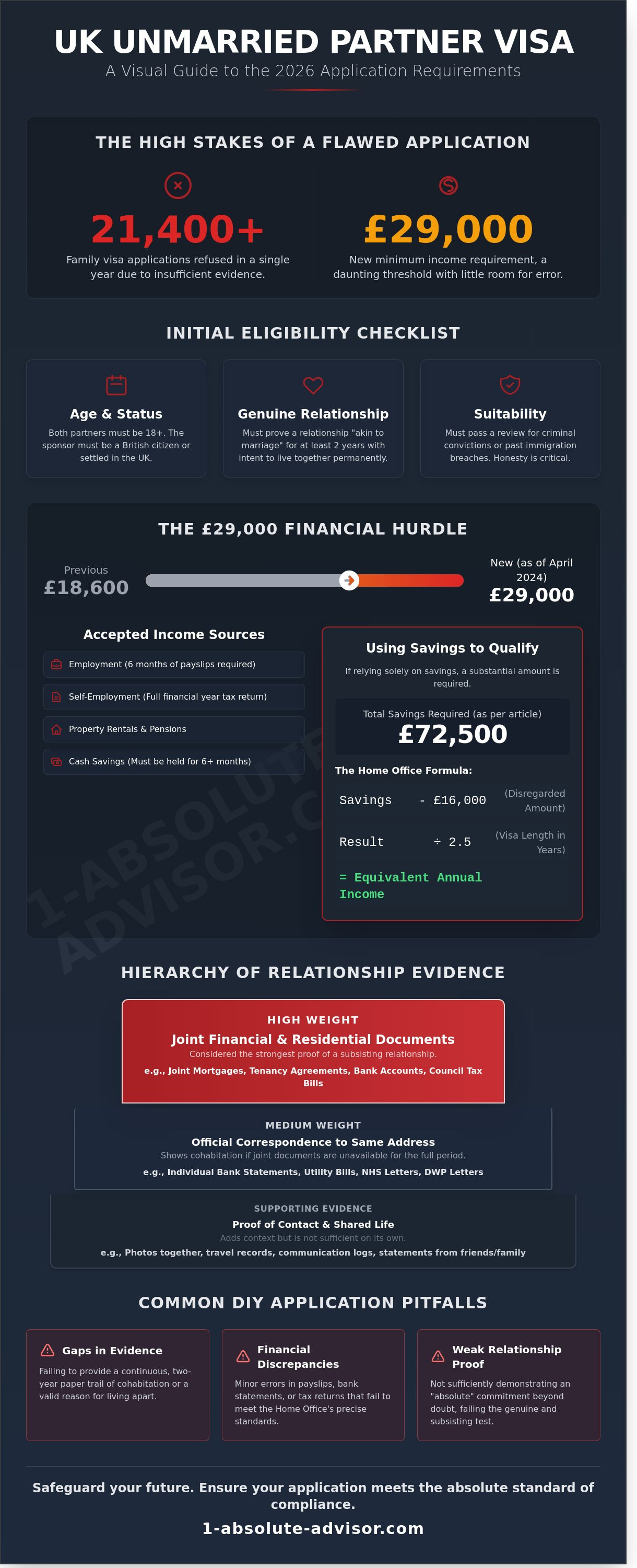
If the applicant is already in the UK with a valid work permit, you can combine both partners’ incomes to reach the £29,000 threshold. For those relying on savings to meet the full requirement without any income, the total needed is £72,500. The formula is specific: only amounts above £16,000 count. You take the total savings, subtract £16,000, and divide the remainder by 2.5 years. If you receive specific benefits like Personal Independence Payment (PIP) or Attendance Allowance, the “adequate maintenance” rule applies instead, which focuses on your weekly disposable income after housing costs.
English Language and Tuberculosis Requirements
The Home Office requires proof of English proficiency at CEFR Level A1 for initial applications. You must use a provider from the UK family visa approved list, such as IELTS SELT or Pearson PTE Academic. Nationals from majority English-speaking countries, including Canada, Australia, and the USA, are exempt from this test. If you hold a degree taught in English that’s verified by Ecctis, this also satisfies the requirement. Applicants from over 100 listed countries, such as India or South Africa, must also provide a valid Tuberculosis (TB) certificate from a clinic approved by the Home Office. For complex cases involving multiple income sources, seeking strategic financial guidance ensures your evidence meets these exacting standards for an unmarried partner visa uk.
Proving Your Relationship: Essential Evidence for 2026
Successful applications for an unmarried partner visa uk depend on a structured hierarchy of proof. Caseworkers in 2026 prioritise objective, third-party evidence over subjective personal accounts. You must demonstrate that your relationship is genuine and subsisting through a clear timeline of commitment. This narrative should span at least 24 months, even if the 2024 rule updates now allow for some flexibility regarding cohabitation under specific circumstances. The Home Office expects a chronological story that proves your lives are permanently intertwined.
If your history includes periods of physical separation, you must document your “intervening devotion” with precision. This concept focuses on how you maintained the bond while apart. Evidence might include 500 pages of chat logs or records of 12 monthly bank transfers to cover shared expenses. If you find the official guidance dense, you can check the basic requirements for a visa for your partner to live in the UK through Citizens Advice for a simplified overview. We recommend organising your documents into two distinct tiers to ensure the caseworker can easily verify your claims.
Tier 1 Evidence: Joint Commitments
Joint financial obligations are the strongest proof of a shared life. We recommend providing at least 6 different sources of correspondence spread across the two-year period to avoid any gaps in your timeline. These documents carry the most weight because they involve legal and financial liability.
- Joint mortgage statements or tenancy agreements signed by both parties.
- Utility bills, such as water, gas, or electricity, specifically naming both partners.
- Council tax bills for the 2025/2026 tax year addressed to both of you at the same residence.
- Official correspondence from government departments like HMRC, the DWP, or the NHS.
Tier 2 Evidence: Shared Life and Social Recognition
Tier 2 evidence supports your Tier 1 documents but cannot replace them entirely. These items add essential context to your unmarried partner visa uk application and prove social recognition of your union. They show that your relationship exists beyond just shared paperwork.
- Travel bookings for at least 3 separate international trips taken together in the last 24 months.
- Photographs showing you with each other’s families at significant events like weddings or birthdays.
- Supportive letters from at least 2 UK-based professionals, such as doctors or employers, who can attest to your relationship.
- Proof of shared household expenses, including being a named driver on a partner’s car insurance policy or having joint gym memberships.
Organising these documents chronologically is vital. A gap of more than 4 months in your evidence can lead to a request for further information, which delays your decision. By presenting a professional, well-indexed bundle, you reduce the risk of refusal and demonstrate the stability the Home Office requires.
How to Apply for an Unmarried Partner Visa: Step-by-Step
Securing an unmarried partner visa uk requires a methodical approach to satisfy Home Office scrutiny. This process moves through five distinct phases, each demanding absolute precision to avoid unnecessary delays or potential refusals. Every detail must align with the current Immigration Rules to ensure a successful outcome.
- Step 1: Document Preparation. Collect and digitise all mandatory evidence. This includes financial records, proof of cohabitation for at least two years, and English language certificates. Ensure all scans are high-resolution and in PDF format.
- Step 2: Online Application. Complete the official form on the GOV.UK portal. Accuracy is vital here. Any inconsistencies between the digital form and your physical evidence often trigger a rejection.
- Step 3: Financial Settlement. Pay the application fee and the Immigration Health Surcharge (IHS). You cannot submit the form or book an appointment without completing these payments.
- Step 4: Biometrics. Book an appointment at a UKVCAS centre within the UK or a VFS Global/TLScontact centre if applying from abroad. They’ll capture your fingerprints and a digital photograph.
- Step 5: Decision Phase. Wait for the Home Office to process your file. Caseworkers might contact you for additional information, so check your email inbox and spam folder daily.
Avoiding Common Application Pitfalls
The “28-day rule” remains the most frequent cause of failure for the unmarried partner visa uk. Your most recent financial evidence, such as bank statements or payslips, must be dated within 28 days of your online submission date. If your statement is 29 days old, the Home Office will likely refuse the application. Ensure every document not in English or Welsh includes a certified translation from a professional translator. A professional cover letter acts as the strategic thread for your submission. It should clearly explain how you meet every requirement, cross-referencing your evidence to guide the caseworker through your relationship history.
Fees and Processing Times
Budgeting for 2026 requires accounting for high administrative costs. Applying from outside the UK currently costs £1,846, while in-country switches or extensions cost £1,048. The Immigration Health Surcharge for a 2.75-year visa is £2,846.25. Standard processing takes 8 to 24 weeks depending on your location. If you require a faster result, Priority Service (£500) offers a decision in 30 days. Super Priority (£1,000) provides an answer by the end of the next working day. These premium services offer the certainty necessary for complex relocation planning and professional stability.
Ensuring Success: Why Professional Legal Guidance Matters
Attempting a DIY application for an unmarried partner visa uk carries substantial financial and emotional risks. With Home Office application fees currently set at £1,846 for those applying from outside the UK, a single oversight in your evidence leads to an expensive refusal. You also risk losing the Immigration Health Surcharge, which costs £1,035 per year. 1 Absolute Advisor’s OISC-registered advisors identify subtle weaknesses in your documentation that an untrained eye might miss, such as gaps in correspondence or financial evidence that doesn’t strictly meet Appendix FM requirements.
The 1 Absolute Advisor approach involves a meticulous document review process. We don’t just check if a document exists; we verify its validity under current UKVI standards. This strategic foresight prepares you for the entire immigration journey. We ensure your initial application sets a consistent foundation for your future Indefinite Leave to Remain (ILR) and British Citizenship applications.
Our Fixed-Fee Application Management
1 Absolute Advisor removes the stress from the partner visa process by offering a clear, fixed-fee structure. This means you won’t face unexpected costs as your case progresses. Our comprehensive management service includes a dedicated caseworker, a bespoke document checklist, and a detailed legal cover letter that argues your case directly to the Home Office decision-maker.
In early 2024, we assisted a couple who had zero cohabitation history due to one partner’s restrictive overseas work contract. While many firms would’ve labelled this case “high risk,” we utilised the latest Home Office policy changes regarding “reasonable explanations” for living apart. By providing 12 months of travel logs and financial support evidence, we secured their visa approval in 28 days.
Your Next Steps with 1 Absolute Advisor
Your journey begins with an initial consultation where we assess your eligibility against the £29,000 minimum income requirement and relationship criteria. Once instructed, we organise your file to meet the highest legal standards, ensuring every bank statement and utility bill is formatted correctly for the digital upload. This level of preparation is why we maintain a high success rate for complex family visas.
Ready to move forward? Secure your future in the UK with our expert partner visa service and let our specialists handle the legal complexities for you.
Securing Your Future Together in the UK
Navigating the unmarried partner visa uk application in 2026 demands more than just a shared history; it requires a precision-engineered evidentiary portfolio. You must demonstrate a genuine relationship through at least two years of cohabitation or equivalent proof while meeting the strict £29,000 financial threshold. Missing a single document or failing the English language requirement often leads to immediate rejection, resulting in the loss of the £1,846 application fee. Our team provides the strategic oversight needed to bypass these pitfalls. Absolute Advisor’s OISC Registered Level 1, 2, and 3 advisors operate from our London headquarters, offering national coverage to couples across the country. We provide fixed-fee services to ensure you don’t face hidden costs during the process. Book Your Professional Immigration Consultation Today and take the first definitive step toward your life in Britain. Your path to residency is clearer when you have an expert mentor by your side.
Frequently Asked Questions
Can I apply for an unmarried partner visa if we have never lived together?
You can apply for an unmarried partner visa without having lived together if you’ve been in a relationship for at least 2 years. Since the rule changes in January 2024, the Home Office no longer mandates a strict two year cohabitation period. You must instead provide evidence of a relationship akin to marriage, such as shared financial responsibilities, regular travel to see each other, or joint care for children.
How much money do we need to show for an unmarried partner visa in 2026?
The minimum gross annual income requirement for an unmarried partner visa is £38,700. This threshold was increased from £18,600 in April 2024 to ensure sponsors can financially support their partners without relying on public funds. You can meet this through employment income, self-employment earnings, or cash savings exceeding £16,000, though the specific calculation for savings depends on your total shortfall in annual income.
What counts as a genuine and subsisting relationship for the Home Office?
A genuine and subsisting relationship is one that’s authentic, ongoing, and intended to be permanent. To successfully obtain an unmarried partner visa uk, you should submit 6 to 10 items of correspondence addressed to both of you at the same address, or separate documents showing you live together. Evidence like holiday bookings, photos from the last 24 months, and logs of daily communication help establish your shared life.
How long does it take to get a decision on an unmarried partner visa?
Standard processing for an unmarried partner visa uk application typically takes 24 weeks when applying from outside the country. If you’re applying from within the UK, the standard wait time is usually 8 weeks. You can often pay an additional £500 for the priority service to receive a decision within 5 working days, or £1,000 for the super priority service to get a result by the next working day.
Can I switch to an unmarried partner visa from a visitor visa while in the UK?
You can’t switch from a visitor visa to an unmarried partner visa while you’re currently in the UK. Immigration rules explicitly prohibit individuals on short-term visitor status from changing to a long-term family route from within the country. You’ll need to return to your home country or a country where you’ve a right of residence to submit your entry clearance application through the appropriate diplomatic post.
What happens if our unmarried partner visa application is refused?
If your application’s refused, you’ll generally receive a letter outlining your right to appeal to the First-tier Tribunal on human rights grounds. You’ve 14 days to lodge an appeal if you’re in the UK, or 28 days if you applied from abroad. In cases where a simple administrative error was made, submitting a fresh application with the correct documentation is often faster than waiting for a tribunal hearing.
Does the unmarried partner visa lead to Indefinite Leave to Remain (ILR)?
The unmarried partner visa provides a clear path to settlement after you’ve spent 5 years in the UK on this route. You’ll initially be granted a visa for 33 months if applying from abroad, or 30 months if switching within the UK. After completing two of these visa terms, you can apply for Indefinite Leave to Remain, provided you still meet the financial requirements and haven’t spent too long outside the country.
Is there an English language requirement for the unmarried partner visa?
You must prove your English language proficiency at level A1 of the Common European Framework of Reference for Languages (CEFR). Most applicants meet this by passing a Speaking and Listening test at an approved SELT provider like IELTS or Pearson. You’re exempt from this requirement if you’re over 65, have a physical or mental condition that prevents you from learning, or hold a degree taught in English.