Holding two passports no longer guarantees a seamless entry into the United Kingdom. Since 25 February 2026, the Home Office has required British dual citizens to present either a valid British passport or a Certificate of Entitlement to enter the country, a significant shift that has caught many frequent travellers off guard. It’s understandable if you feel concerned about how these evolving dual citizenship uk rules affect your global mobility or your long term legal security.
You deserve a strategy that replaces border-control uncertainty with professional clarity. We’ll show you how to manage the new Electronic Travel Authorisation (ETA) system and navigate the naturalisation process, which now carries a £1,709 application fee as of April 2026. This guide breaks down the transition to digital eVisas and provides the technical insights needed to secure your British Citizenship or Indefinite Leave to Remain without administrative delays. We’ll explore the most cost-effective travel documents and the precise steps required to maintain your status in an increasingly digital immigration landscape.
Key Takeaways
- Understand the legal framework of the British Nationality Act and how the Right of Abode provides a permanent exemption from UK immigration controls.
- Master the updated dual citizenship uk rules for 2026 to ensure you carry the mandatory travel documents required to avoid being denied entry at the border.
- Learn the precise residency requirements and absence limits needed to successfully transition from Indefinite Leave to Remain to a British citizenship application.
- Evaluate the impact of the Master Nationality Rule on your access to British diplomatic assistance while visiting your other country of citizenship.
- Identify how a professional review of your naturalisation strategy can help you navigate complex digital status requirements and 2026 travel policies.
Does the UK Allow Dual Citizenship? The 2026 Legal Framework
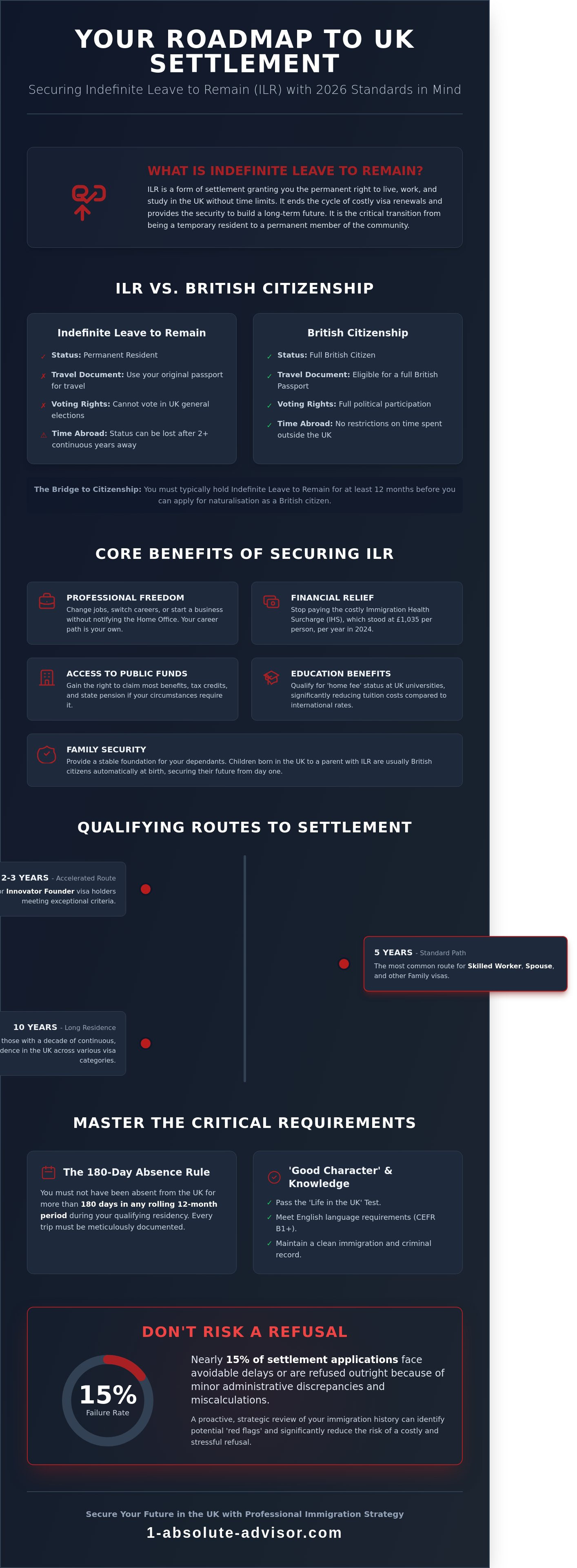
The United Kingdom maintains a remarkably flexible stance toward multiple nationalities. Under the established British nationality law, the government doesn’t require you to choose between your current passport and a British one. This permissive approach means you can enjoy the benefits of being a UK citizen without severing ties to your home country. Understanding the dual citizenship uk rules starts with recognizing that “dual status” isn’t something you apply for as a separate category. It’s simply the legal result of acquiring British citizenship while your original country allows you to keep yours.
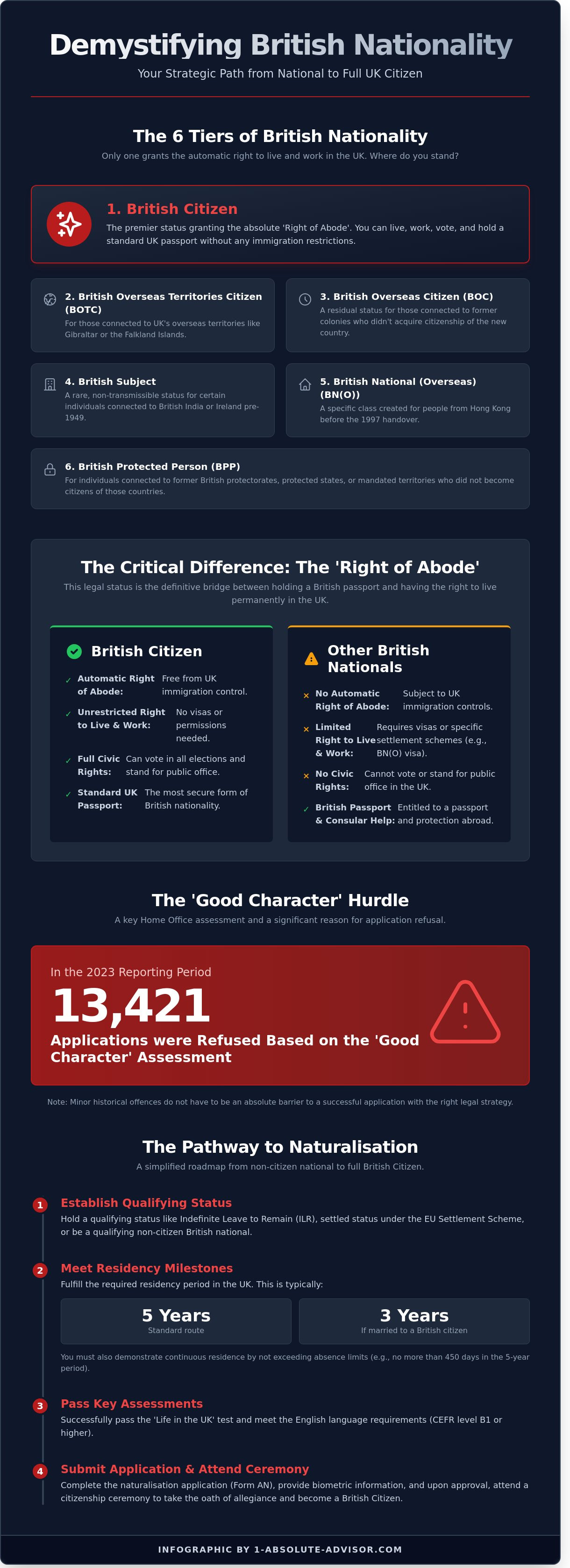
A core benefit of this status is the Right of Abode. This legal designation means you’re entirely exempt from UK immigration control. You can live, work, and travel freely without the need for visas or time-limited permissions. It’s vital to distinguish between holding two nationalities and merely possessing two passports. Nationality is your legal bond with a state; a passport is just the travel document that proves it. In the eyes of the Home Office, once you’re British, you’re treated as such regardless of any other citizenships you hold.
Automatic Acquisition vs. Naturalisation
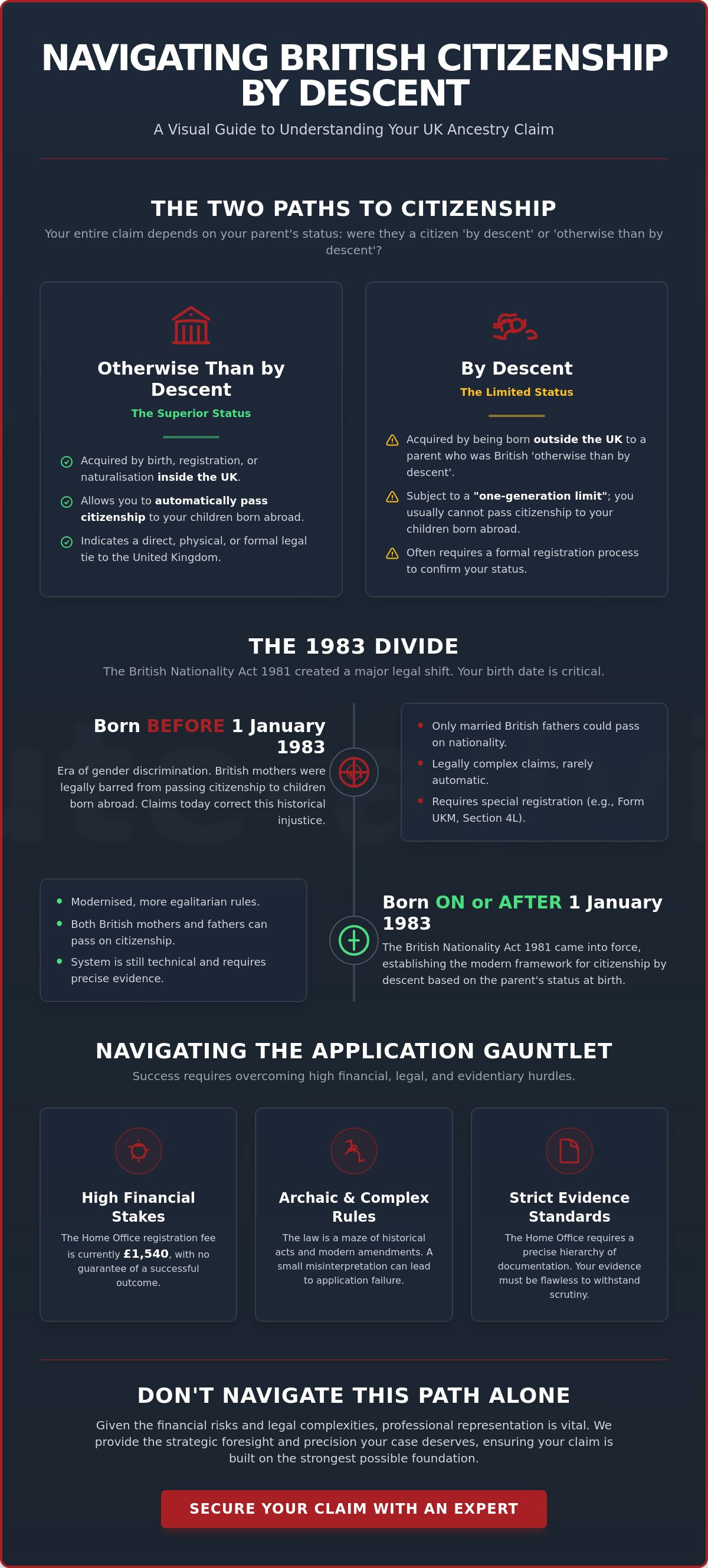
Dual nationality often occurs automatically. If you’re born in the UK to parents with settled status, or born abroad to a British parent, you might already hold dual status by operation of law. For those moving to the UK, the path usually involves naturalisation. The Home Office doesn’t maintain a formal register of your other nationalities, nor does it notify your home country when you become British. This lack of a renunciation requirement simplifies the process, though it places the burden of due diligence squarely on the applicant to understand how their original citizenship might be affected.
International Conflicts: When the Other Country Says No
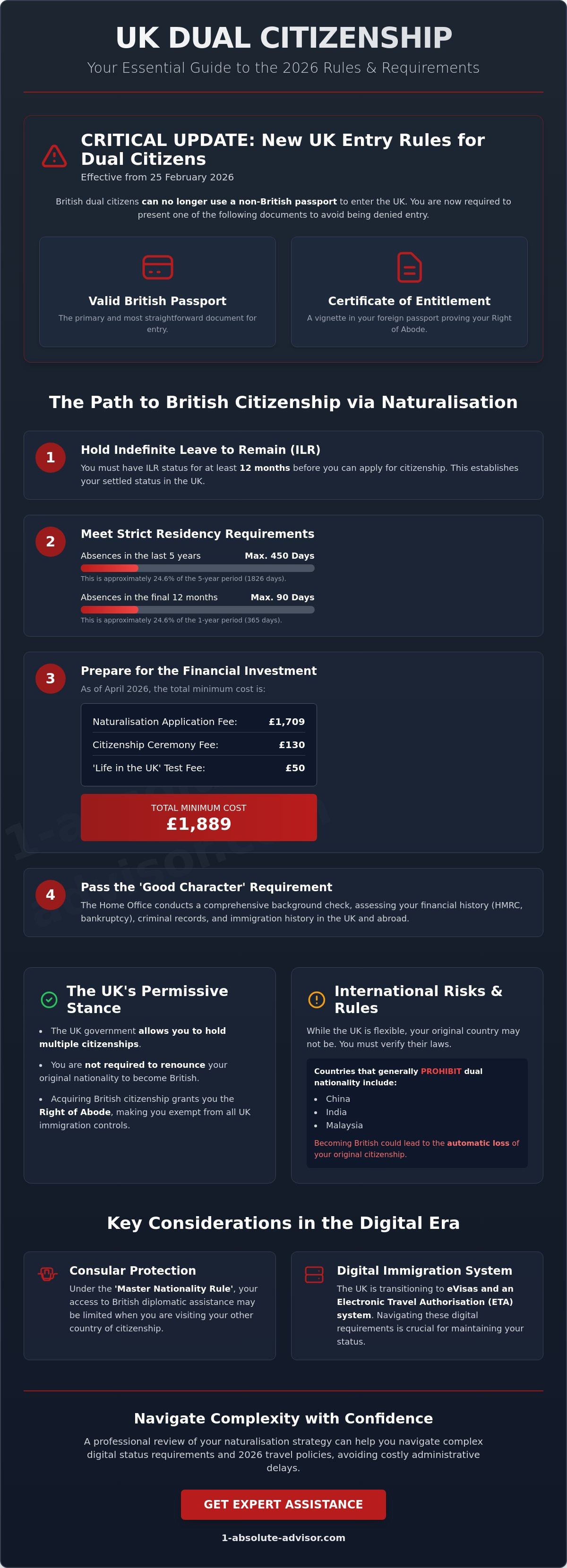
While the UK is permissive, other nations are not. Countries like China, India, and Malaysia generally prohibit their citizens from holding a second nationality. If you naturalise as a British citizen, you may automatically lose your original citizenship under the laws of those nations. This can have serious implications for property ownership, inheritance rights, and future travel to your country of origin. We always recommend a strategic review of your home country’s specific statutes before you commit to the British naturalisation process. This ensures your global legal standing remains secure and predictable.
Acquiring British Nationality: Key Rules and Requirements for 2026
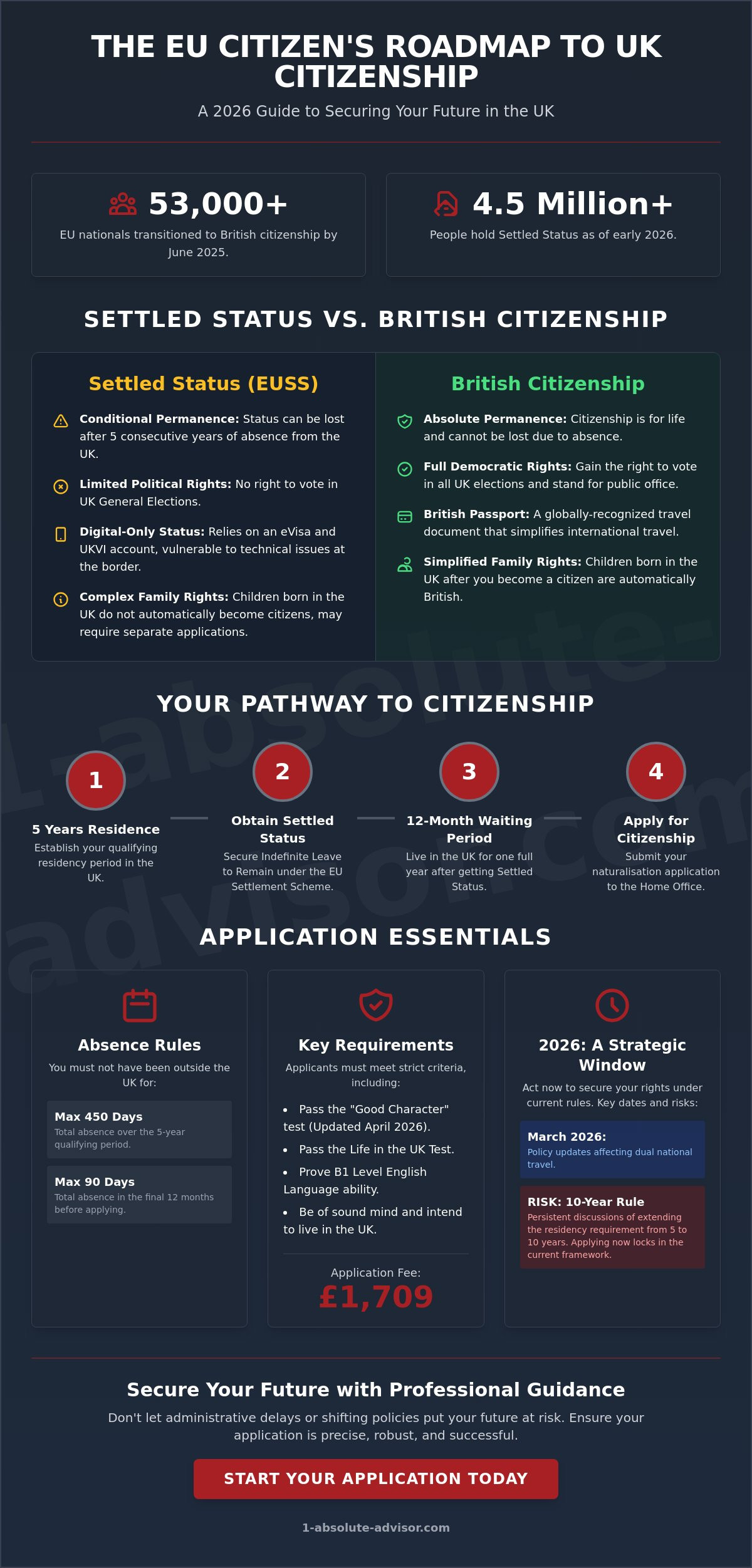
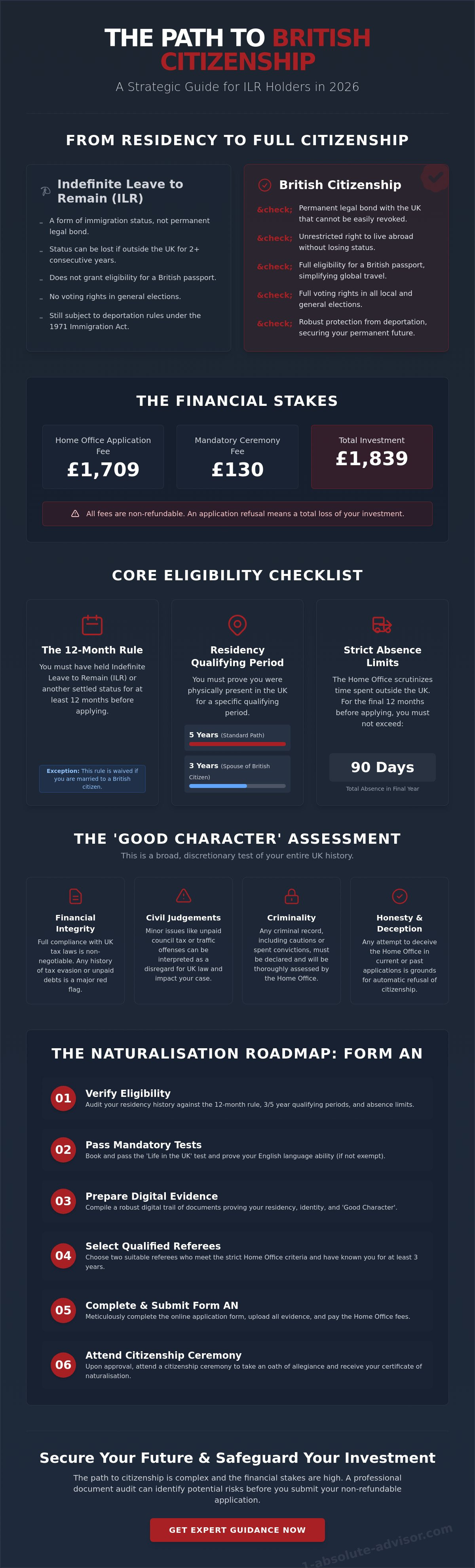
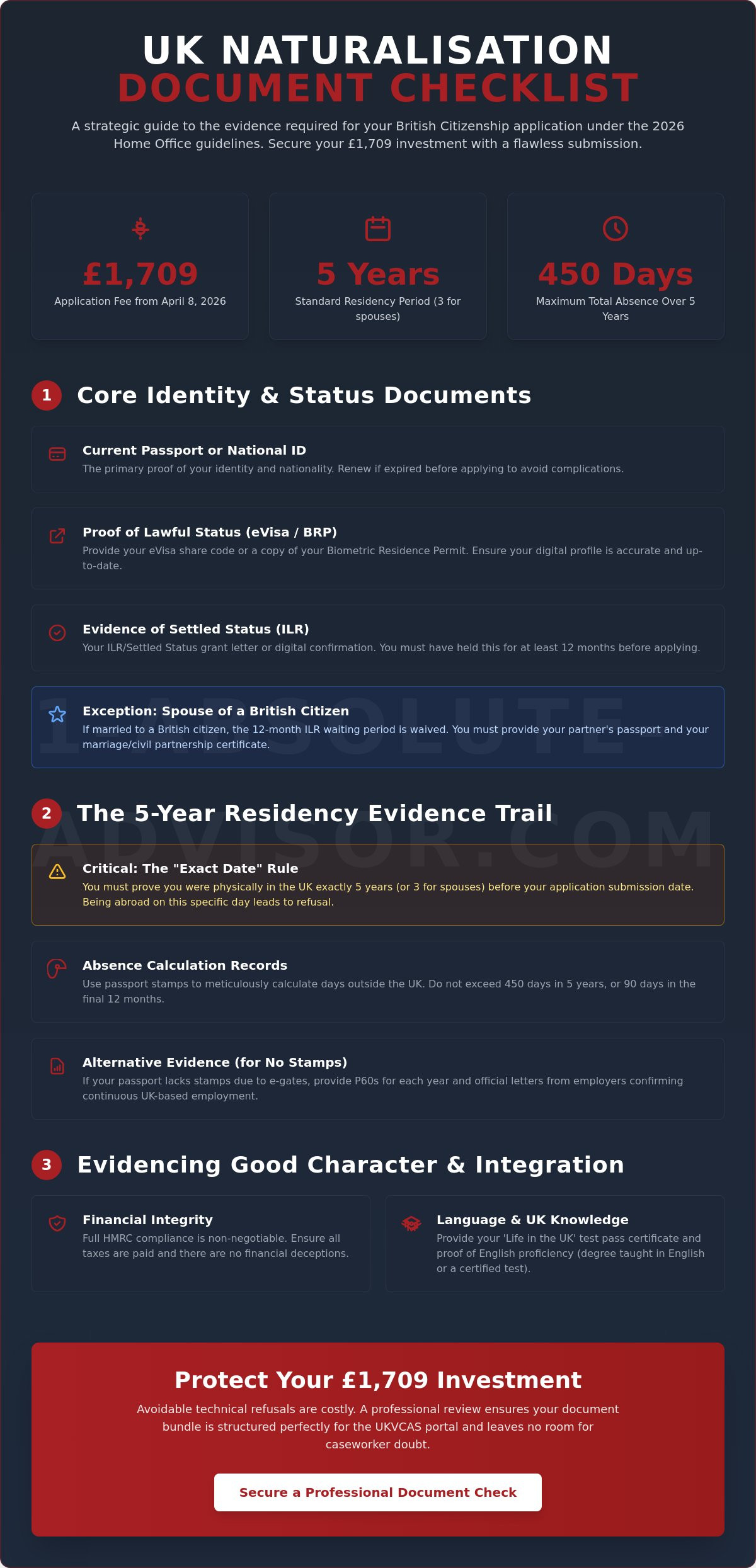
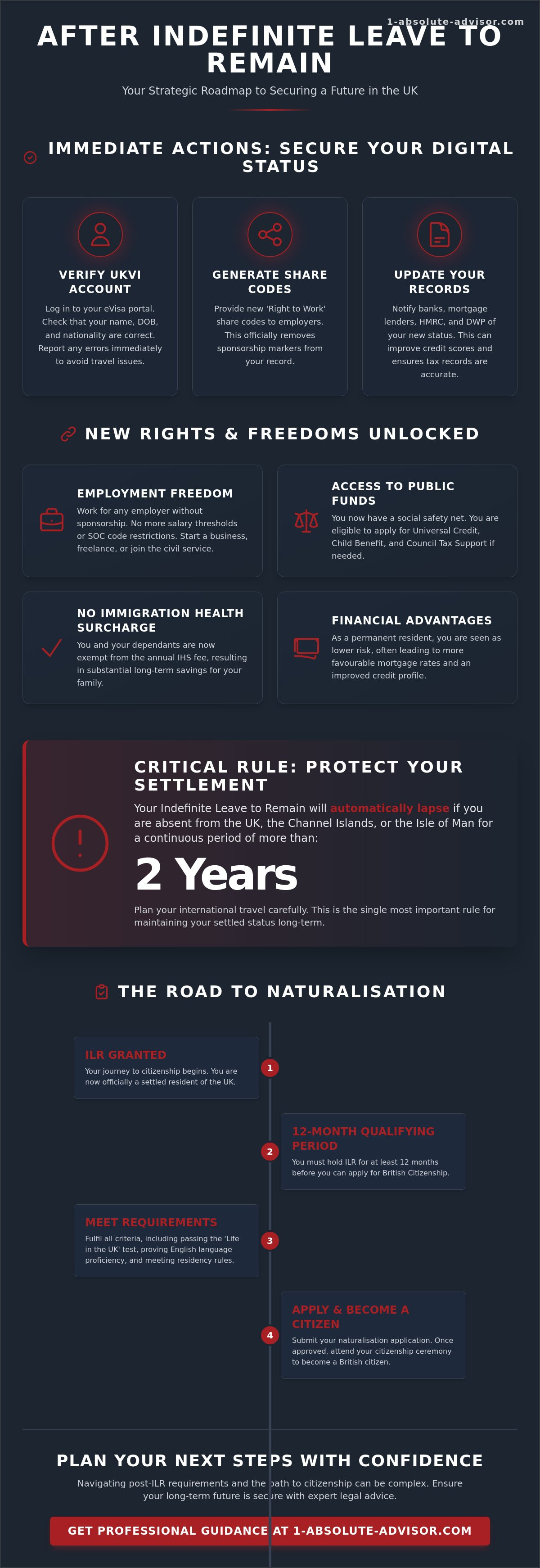
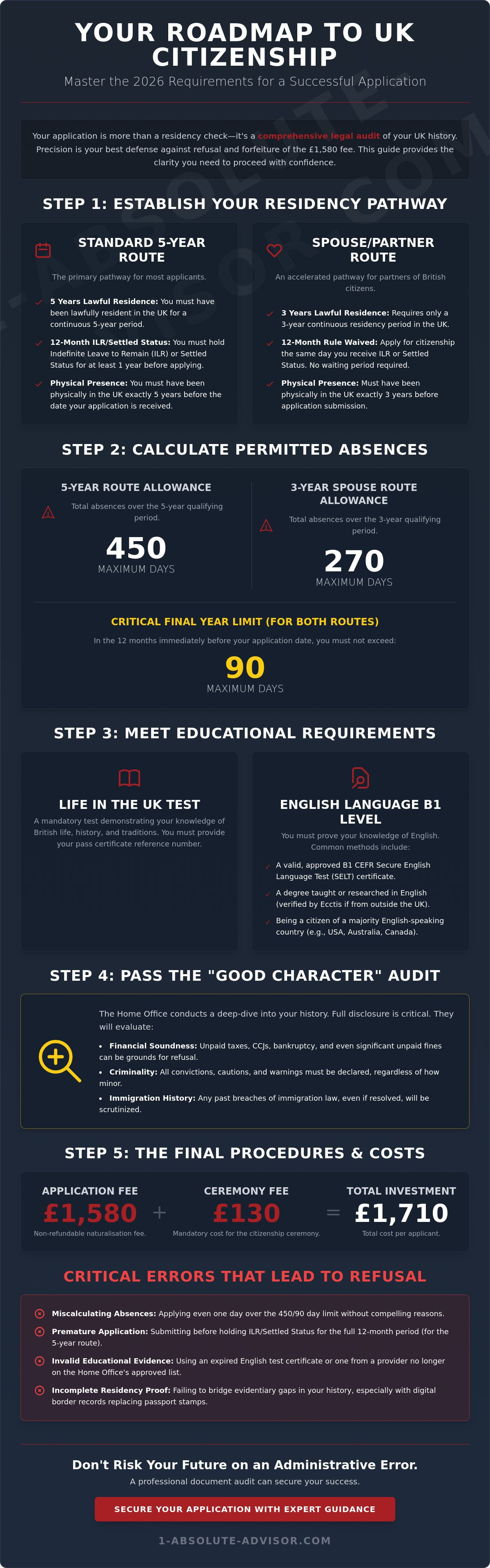
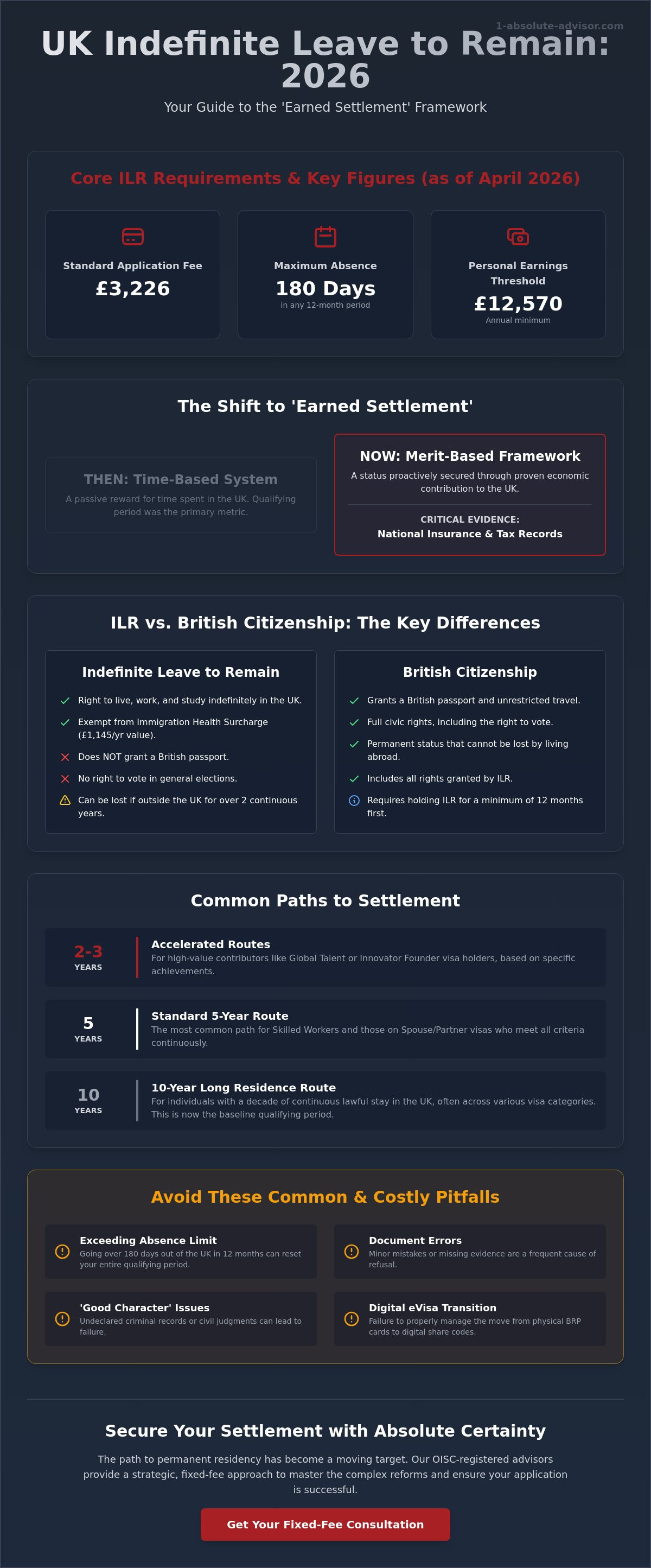
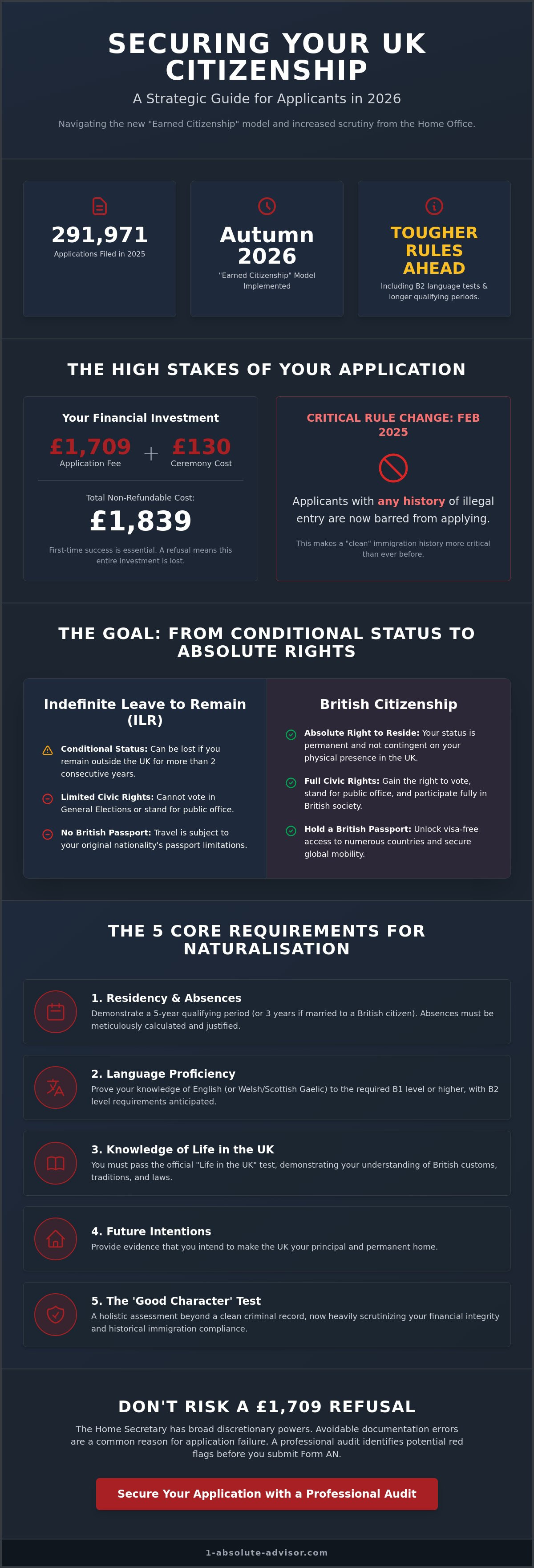
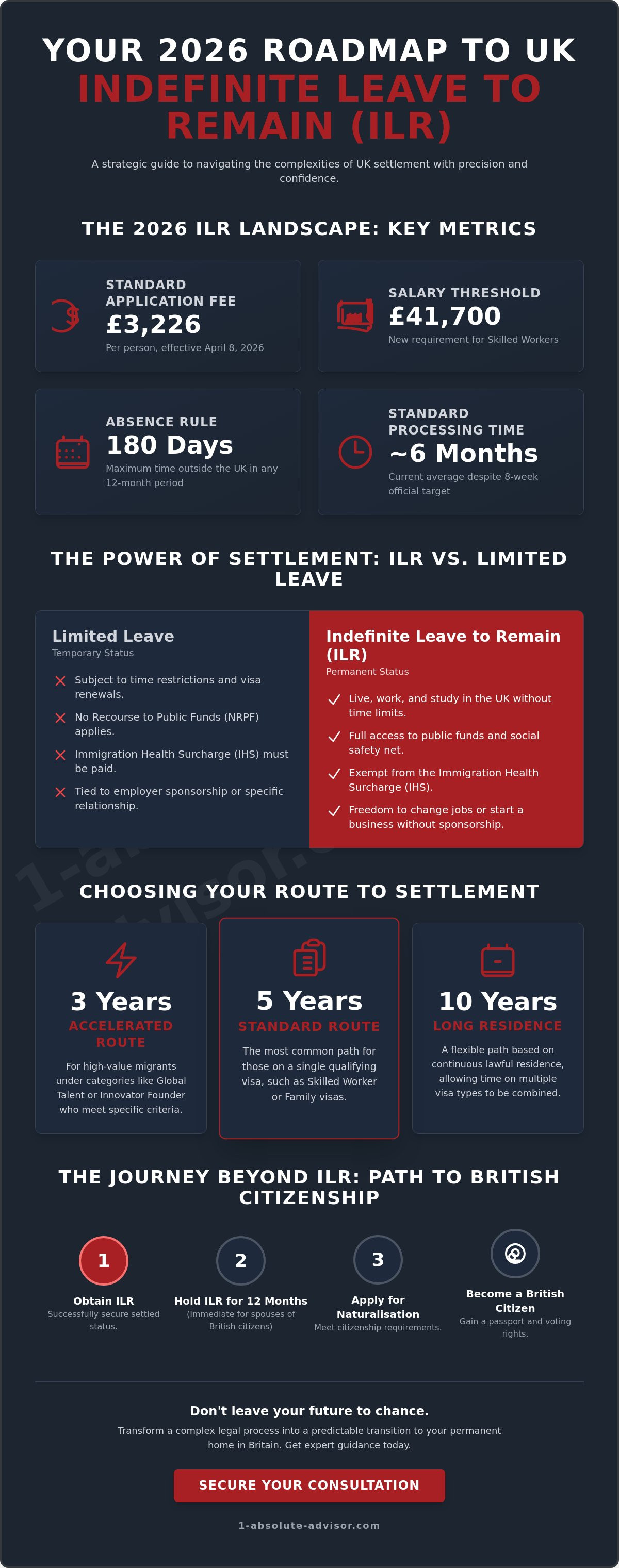
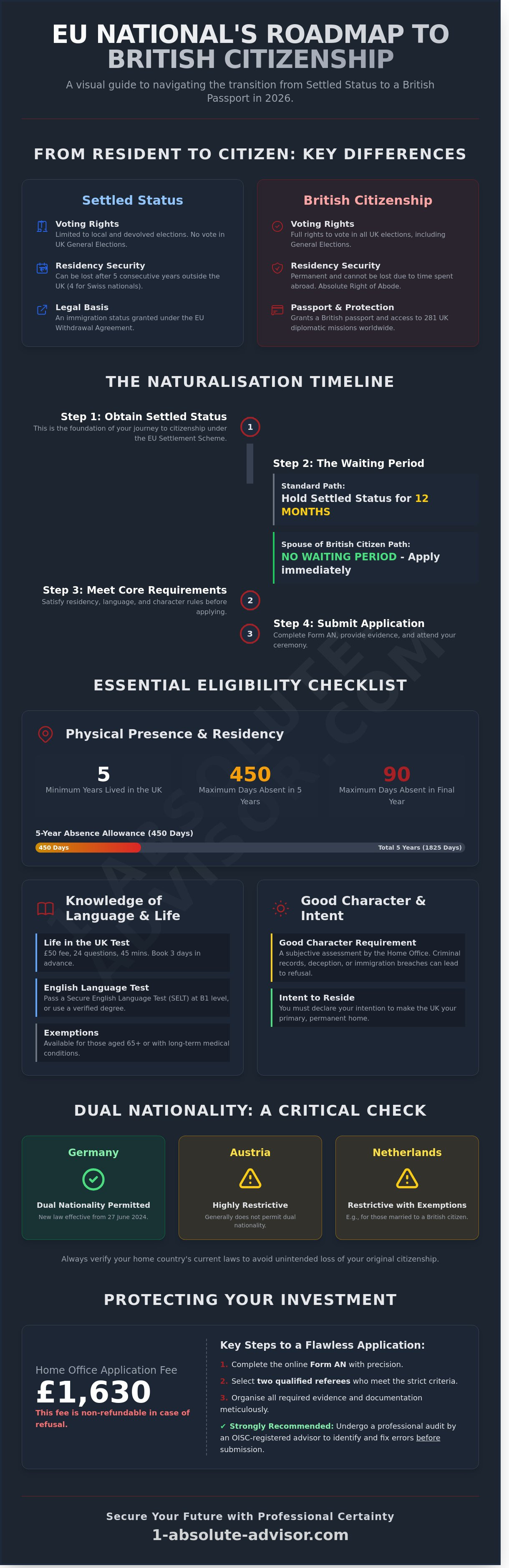
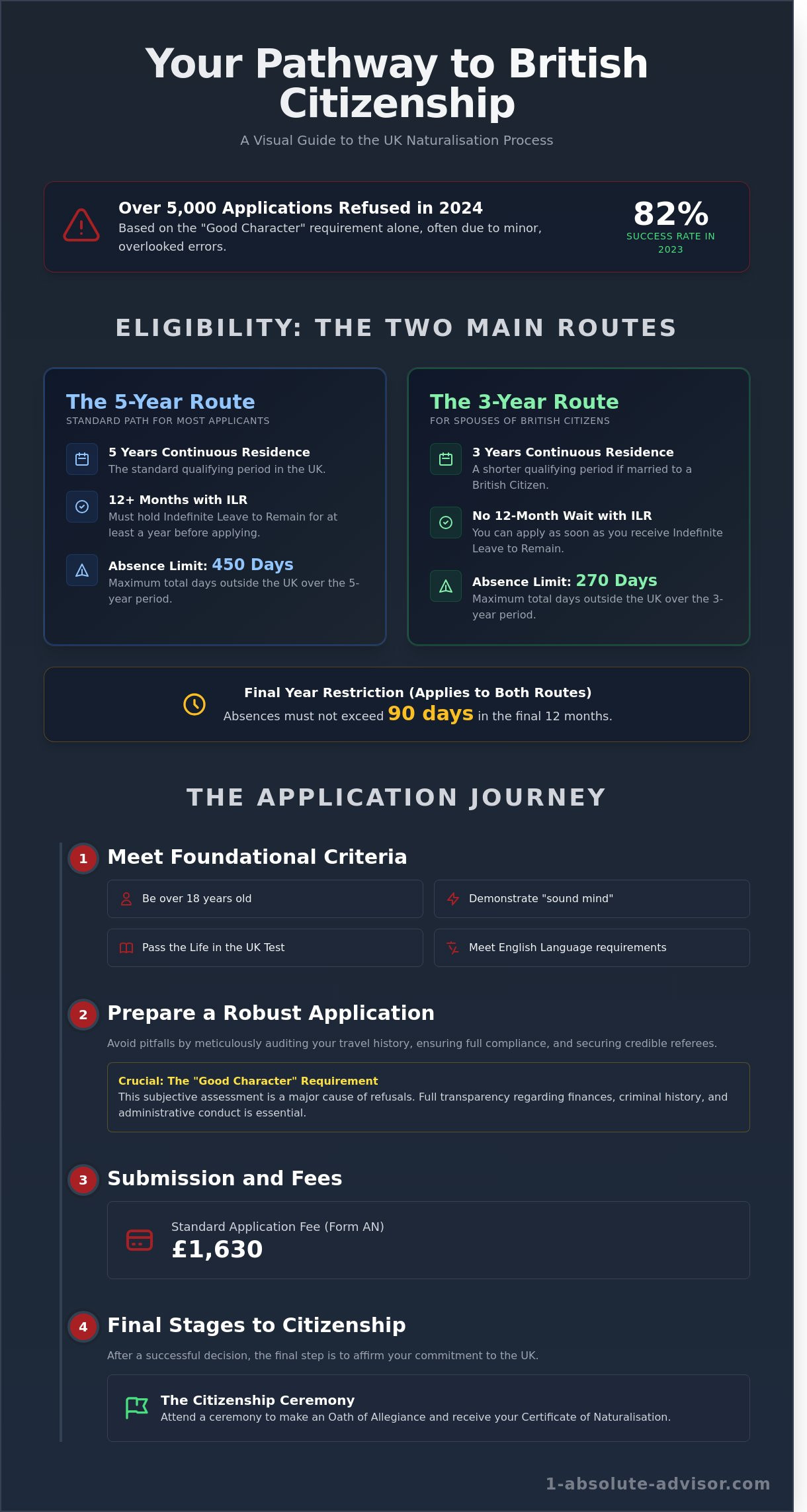
While the UK government rules on dual citizenship allow for multiple nationalities, the naturalisation process itself is a meticulous legal undertaking. Most applicants must first hold Indefinite Leave to Remain (ILR) for at least 12 months before they become eligible to apply for citizenship. As of 8 April 2026, the application fee for naturalisation stands at £1,709, excluding the £130 ceremony fee and the £50 Life in the UK test. This financial commitment underscores the importance of ensuring every residency and character requirement is met with absolute precision before submission.
Residency requirements are the most common hurdle for dual national applicants. The Home Office applies a strict 450-day rule for the five-year qualifying period. You must prove you haven’t been absent from the UK for more than 450 days in total over those five years. Additionally, your absences in the final 12 months before applying must not exceed 90 days. These dual citizenship uk rules are designed to ensure that the UK is your principal home. If your professional or personal life requires frequent international travel, you’ll need to maintain rigorous records to justify any technical breaches of these limits.
The Good Character Requirement for Dual Nationals
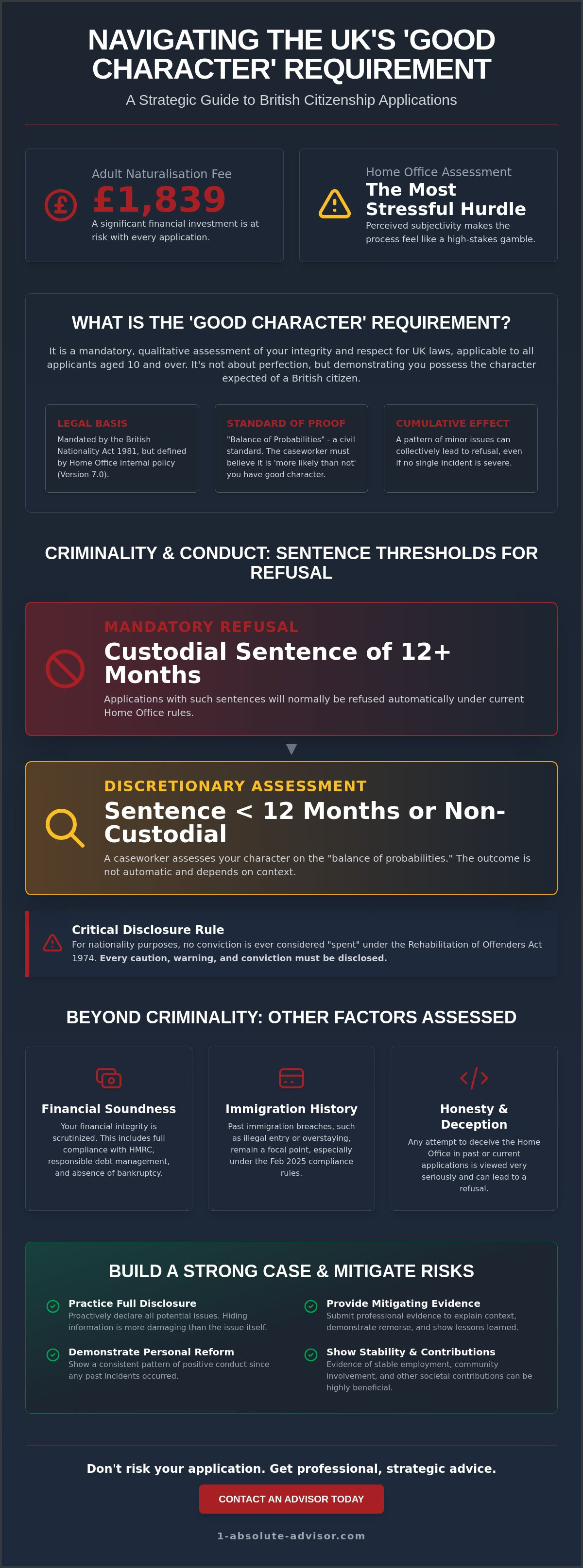
The Home Office conducts a comprehensive review of your background, extending far beyond a simple criminal record check. Case workers examine financial soundness, including your history with HMRC and any potential bankruptcy proceedings. For dual nationals, immigration breaches in other countries can also impact your UK application. The Home Office views Good Character as a subjective but strictly evidence-based assessment of an applicant’s entire history. Any failure to disclose previous civil penalties or minor legal issues can lead to a mandatory refusal based on deception.
Registration for Children and Special Cases
Registration is an alternative route to citizenship that often applies to children born in the UK to non-settled parents who later gain ILR. This process is generally more cost-effective than naturalisation, with a registration fee of £1,000 for children. In 2026, standard processing times for these applications remain between 3 to 6 months. Registration is also the primary route for certain British Overseas Territories citizens and individuals with specific historical claims to nationality. Unlike naturalisation, registration is often a matter of legal right rather than Home Office discretion, provided the statutory criteria are met.
The complexity of these requirements often necessitates a professional second opinion to avoid costly refusals. If you’re unsure how your specific travel history or background aligns with these standards, our British Citizenship Application Service provides the structured oversight necessary for a successful outcome.
Essential Travel Rules for Dual Nationals in 2026
The border control landscape for multiple nationality holders underwent a fundamental shift on 25 February 2026. From this date, the Home Office mandated that all British dual citizens must present either a valid British passport or a foreign passport containing a Certificate of Entitlement to enter the UK. Relying solely on a foreign passport, even if you previously entered without issue, now carries significant risks. Carriers are increasingly cautious; they may exercise their discretion to deny boarding if your documentation doesn’t explicitly prove your right of abode. This strict enforcement ensures that the UK’s border systems accurately identify citizens who are exempt from the Electronic Travel Authorisation (ETA) requirements.
While the new ETA system carries a £20 fee for many foreign nationals as of April 2026, British and Irish citizens remain exempt. However, this exemption is only functional if your status is clearly verifiable at the point of departure. If you attempt to travel on a non-UK passport without a Certificate of Entitlement, you might be treated as a visitor subject to standard immigration rules or, worse, blocked from your flight entirely. Mastery of the dual citizenship uk rules requires you to treat your British travel documents as your primary identity for all UK-bound journeys to avoid these administrative complications.
British Passports vs. Certificates of Entitlement
Choosing between a British passport and a Certificate of Entitlement is often a matter of cost and strategy. A standard adult British passport applied for online costs £94.50, whereas a Certificate of Entitlement carries a significantly higher fee of £589. Under the British Nationality Act 1981, you cannot legally hold both documents simultaneously. Most dual nationals opt for the passport due to its lower cost and universal recognition, but those who must travel on a foreign passport for specific legal reasons in their other country of citizenship find the digital Certificate of Entitlement an essential, albeit expensive, alternative.
Digital Status for Dual British-EU Citizens
For dual British-EU citizens, the transition to a fully digital border system adds another layer of complexity. It’s vital to ensure your foreign passport is correctly linked to your UKVI account if you’re still transitioning from the EU Settlement Scheme. You must maintain absolute consistency in your personal data across both national identities. If you renew your foreign passport or change your name, you should update your digital status immediately through the “Update your UKVI account” service. This prevents data mismatches that could trigger unnecessary delays during biometric scans at the border.
Risks and Considerations: Consular Protection and Obligations
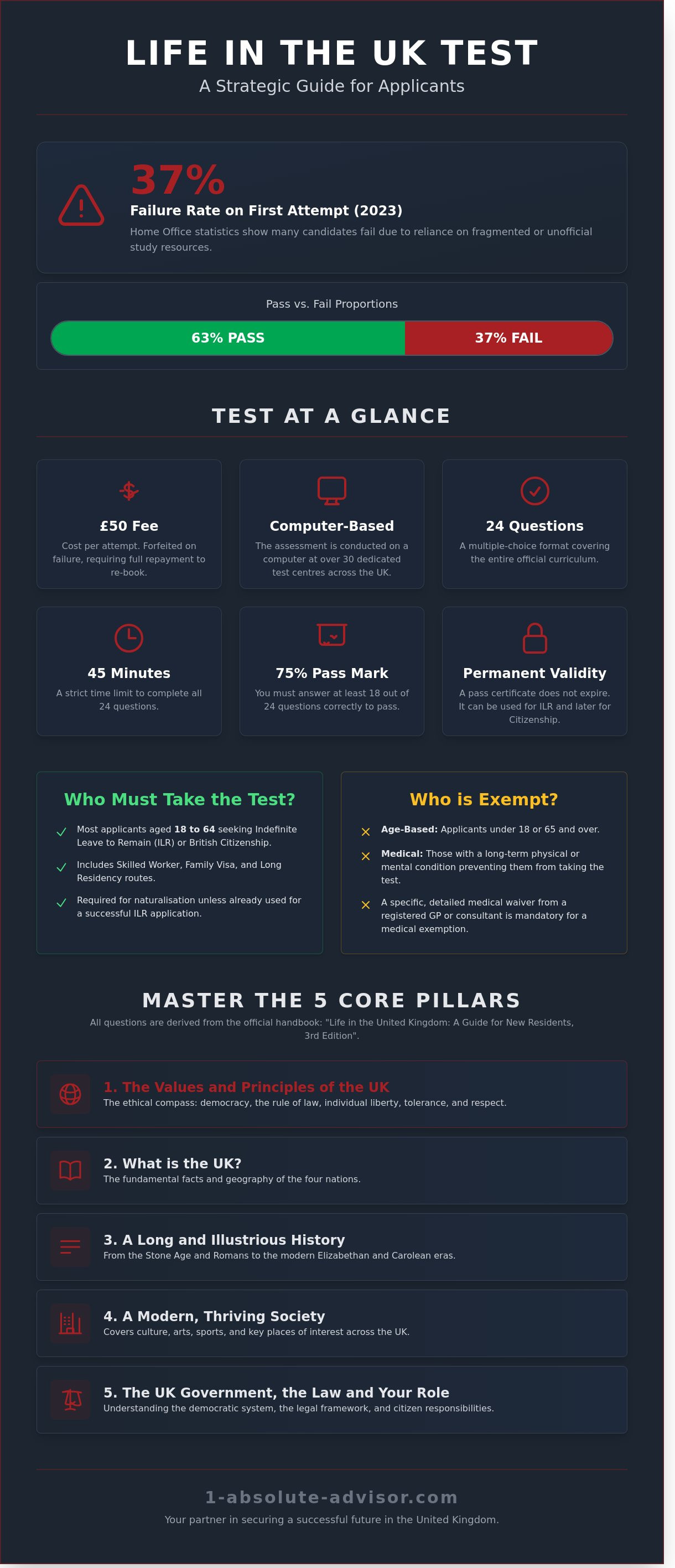
Dual status is often viewed through the lens of convenience and travel freedom, yet it introduces a distinct set of legal responsibilities that require careful management. While the dual citizenship uk rules are among the most permissive in the world, they cannot override the sovereign laws of your other country of nationality. Holding two passports means you’re simultaneously bound by the statutes of two different nations. This can lead to unforeseen obligations, such as mandatory national service, global taxation requirements, or specific voting duties that apply even if you reside permanently in the UK. You must evaluate these responsibilities before naturalising, as the British government cannot exempt you from the legal duties imposed by another state.
Under international law, the Master Nationality Rule dictates that a state may not afford diplomatic protection to one of its nationals in another state where that person is also a national. This principle has practical consequences for your security. If you encounter legal difficulties or are detained in the country of your second citizenship, the British Consulate is legally restricted from intervening on your behalf. They cannot provide the same level of assistance they would offer to a mono-national British citizen. This protection gap makes it vital to understand the political and legal climate of your other country of citizenship before travelling on that passport.
The Diplomatic Protection Gap
The UK government explicitly states that it cannot provide diplomatic assistance to dual nationals when they are in the country of their other nationality. This limitation applies to emergency evacuations, legal representation, and consular visits during detention. To mitigate these risks, we recommend maintaining active records with both authorities and always checking the latest FCDO travel advice. Carrying both passports is often necessary to satisfy different border authorities, but you should be aware that presenting a foreign passport in its home country confirms your status as a local citizen, further cementing the diplomatic protection gap.
Administrative and Data Consistency
Maintaining administrative harmony between two sets of national documents is a significant technical challenge. Differences in name transliteration, particularly between non-Latin scripts and English, can create data mismatches that complicate UK border crossings. Such discrepancies often trigger flags in the UK’s digital border systems, potentially leading to delays or issues with your eVisa linkage. Ensuring that your personal details are identical across all identity documents is essential for a smooth experience. If you’re concerned about how historical data inconsistencies might affect your standing, our British Citizenship Application Service provides the professional oversight needed to resolve these conflicts before they impact your status.
Expert Assistance: Navigating Your British Citizenship Application
Navigating the administrative labyrinth of British nationality requires more than just completing forms; it demands a strategic understanding of how current dual citizenship uk rules interact with your personal and professional history. The stakes are high. With the naturalisation fee set at £1,709 as of April 2026, a single oversight in your residency records or a misunderstood “good character” requirement can lead to a costly refusal. We provide the technical oversight necessary to ensure your application is robust from the outset, moving beyond simple data entry to offer a comprehensive legal review of your standing.
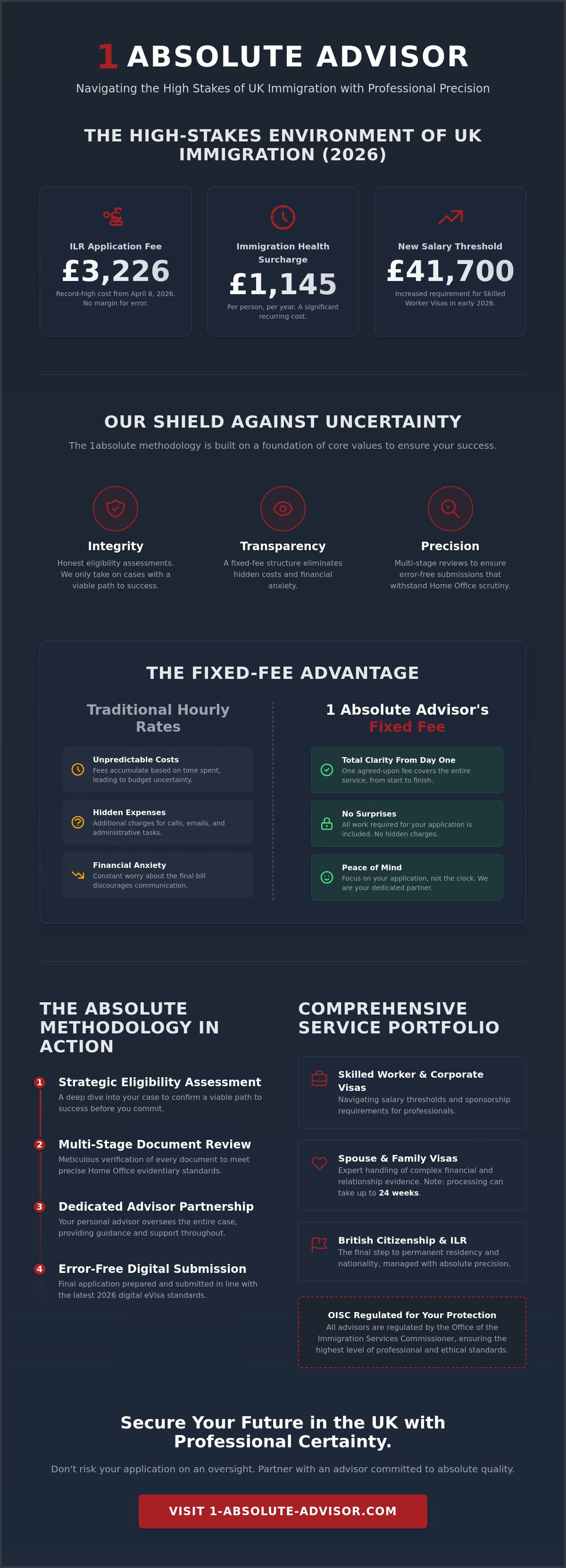
Our approach at 1 Absolute Advisor is built on transparency and professional integrity. We offer fixed-fee structures for our British Citizenship Application Service, providing you with financial predictability throughout the process. Our OISC-registered consultants act as your strategic partners, ensuring that every piece of evidence submitted meets the rigorous standards of the Home Office. This level of professional scrutiny is particularly vital for dual nationals who must manage complex digital status requirements and 2026 travel policies simultaneously.
Comprehensive Application Management
We begin with a detailed eligibility assessment that accounts for the nuances of your specific dual nationality. Our team manages the precise preparation of your documentation, ensuring that your 450-day and 90-day absence records are calculated with absolute accuracy. We also draft professional legal cover letters that explain complex nationality histories or technical breaches of residency rules. This proactive documentation strategy addresses potential Home Office concerns before they can result in delays, providing a clear narrative of your commitment to the UK.
Strategic Consultation and Support
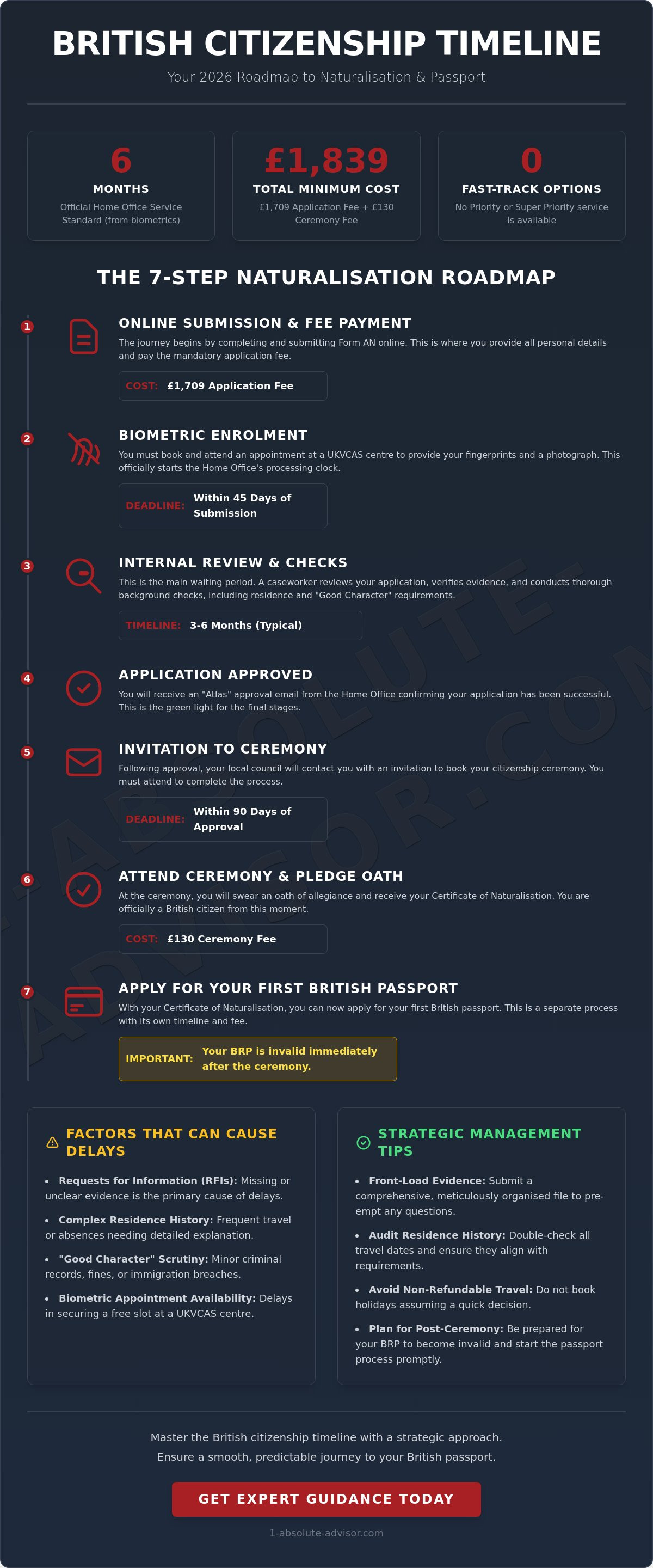
Securing a second nationality involves more than just UK law; it requires an analysis of how naturalisation impacts your original citizenship. We provide a professional audit of your evidence before submission, identifying any data mismatches that could trigger issues with your future eVisa or British passport application. Our consultants guide you through the transition to digital status, ensuring your records remain consistent across both national identities. To secure your future and navigate these complexities with confidence, you can book a consultation with our UK immigration experts today. We’ll help you manage the 3 to 6-month processing window with the assurance that your case is in the most capable hands.
Securing Your Global Status for the Future
The landscape of British nationality is becoming increasingly digital and strictly enforced. From the mandatory use of British travel documents at the border to the nuanced residency requirements for naturalisation, staying informed is the only way to protect your status. The dual citizenship uk rules in 2026 demand absolute administrative consistency to avoid boarding denials or application refusals. By mastering these regulations, you ensure that your right of abode remains a secure foundation for your international lifestyle.
As specialists in complex British nationality law, we provide the strategic foresight needed to navigate these changes without stress. Our OISC-registered immigration consultants offer fixed-fee application management, ensuring your path to citizenship is transparent and legally sound. Secure your British citizenship with expert guidance from 1 Absolute Advisor and move forward with the confidence that your legal affairs are in expert hands. Your dual-national future is a valuable asset; let’s ensure it’s protected with precision and professional integrity.
Frequently Asked Questions
Does the UK allow dual citizenship in 2026?
Yes, the United Kingdom continues to allow dual nationality under the British Nationality Act 1981. You don’t need to apply for dual status; it’s a legal standing you acquire by holding British citizenship alongside another nationality. The UK government doesn’t require you to renounce your original citizenship, though you should check if your home country has similar permissive laws.
Can I travel to the UK with my non-British passport if I am a dual citizen?
You can only enter the UK on a foreign passport if it contains a Certificate of Entitlement to the Right of Abode. Since 25 February 2026, the Home Office has strictly enforced rules requiring dual citizens to prove their right of abode at the point of boarding. Without a British passport or this specific certificate, you risk being denied entry by your travel carrier.
Do dual British citizens need an ETA to enter the UK?
No, British and Irish citizens are exempt from the Electronic Travel Authorisation (ETA) system and the associated £20 fee. However, this exemption only applies if you can prove your citizenship at the border. To benefit from these dual citizenship uk rules, you must present a valid British passport or a foreign passport with a Certificate of Entitlement to avoid being treated as a standard visitor.
Will I lose my original citizenship if I apply for British nationality?
The UK government won’t ask you to give up your original nationality, but your home country might have different regulations. Nations such as China, India, and Malaysia generally don’t permit dual citizenship and may revoke your original passport automatically upon UK naturalisation. It’s essential to verify your country of origin’s statutes before proceeding with a British citizenship application.
What is a Certificate of Entitlement and do I need one?
A Certificate of Entitlement is a vignette placed in a foreign passport that proves you have the Right of Abode in the UK. As of April 2026, this document costs £589. You only need one if you choose to travel to the UK on a non-British passport instead of using a standard British passport, which is the more cost-effective option at £94.50.
How much does it cost to apply for British citizenship in 2026?
The application fee for naturalisation as a British citizen is £1,709 as of 8 April 2026. Successful adult applicants must also pay a mandatory £130 fee for their citizenship ceremony. Additional costs include the £50 Life in the UK test and a potential £19.20 biometric enrolment fee, bringing the total standard investment to approximately £1,908 per adult.
Can my children hold dual UK citizenship?
Yes, children can hold multiple nationalities if they qualify for British citizenship by birth or descent. If a child isn’t automatically a citizen, you can apply to register them for a fee of £1,000. Like adults, children aren’t required by the UK to renounce other citizenships, allowing them to maintain global mobility from an early age.
What happens if I enter the UK on my foreign passport without proving British citizenship?
You may be treated as a foreign visitor, which subjects you to stay limits and prohibits you from accessing public funds. If your foreign nationality requires an ETA or visa, and you haven’t obtained one because you’re a citizen, you might be blocked from boarding your flight. Proving your status with the correct documents is vital to exercising your full rights as a dual national.